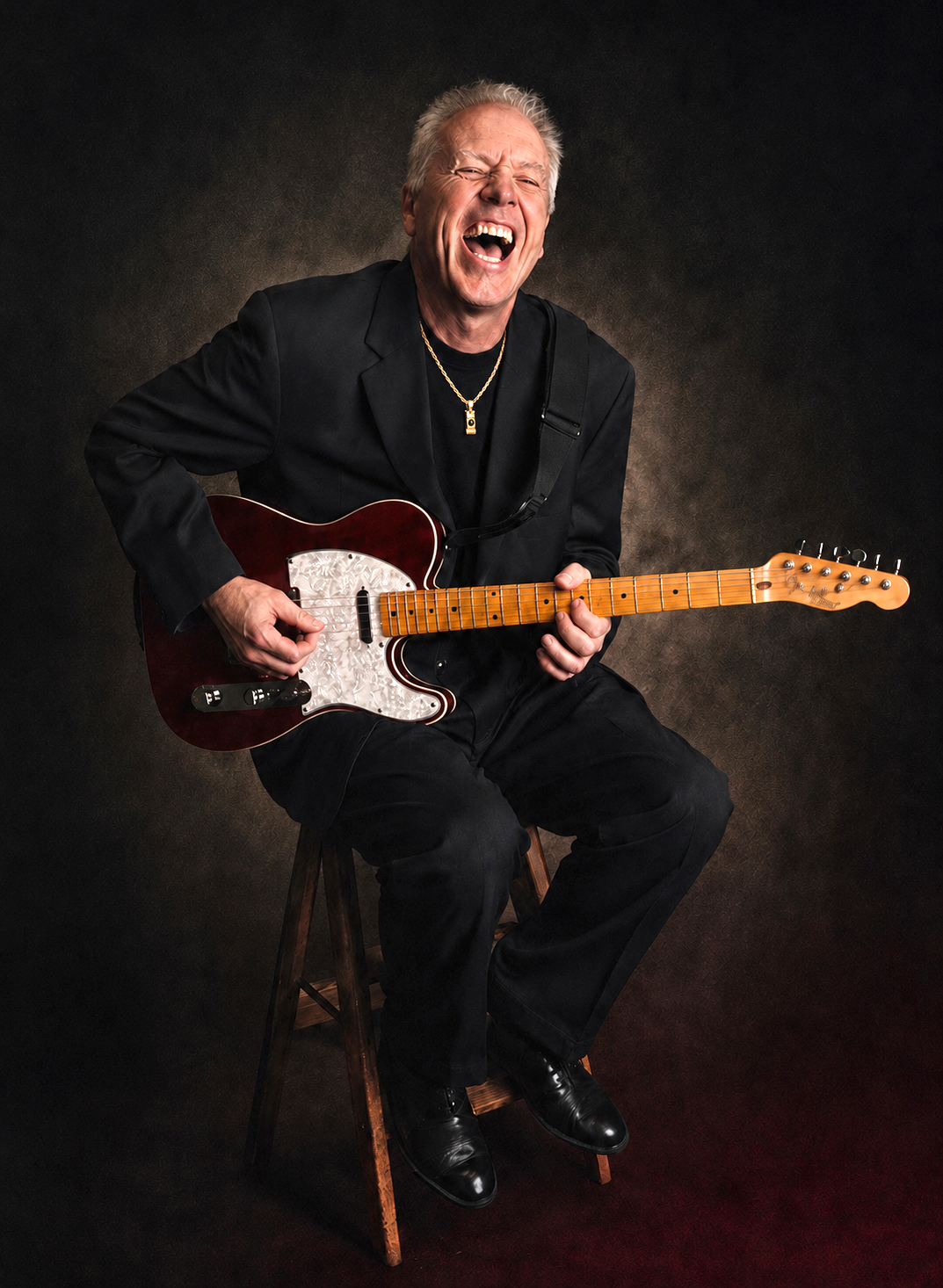
After stepping away from the stage 16 years ago, Michael Robinson returns to music to release an album he had dreamed of making for more than 35 years.
Holding Onto Lightning is not a look back. It's a leap forward — earlier songs reimagined with new titles, rewritten lyrics, fresh leads and fills, and an edgy new sound.
A former alt-rock and roadhouse blues frontman, Robinson delivers a modern rock album with deep roots DNA. Packed with big hooks, sharp storytelling, and a healthy dose of mischief, the record roams through cheating lovers, million-dollar cages, spiritual awakenings, an outlaw's desperate run for freedom, and one unforgettable song about a man who wants to marry his guitar.
His music features groove-driven songs, tasty arrangements, and a cast of great players. Saxophone, harmonica, and contrasting slide guitars—one smooth and velvety, the other thick and throaty—give the album a distinctive stamp.
Engineered and mixed by an award-winning engineer who called it one of the most exciting projects of his career — this is a record that revels in the joy of rock and roll.
Robinson had been focused on his career as a visual artist when he began hearing new versions of his songs in his head. The only way to scratch that itch was to go back to the studio.
Robinson's visual art and music are closely intertwined. The titles and inscriptions on many of his paintings reference music, from classics like Bowie and Hendrix to modern rock bands like Rival Sons and Highly Suspect.
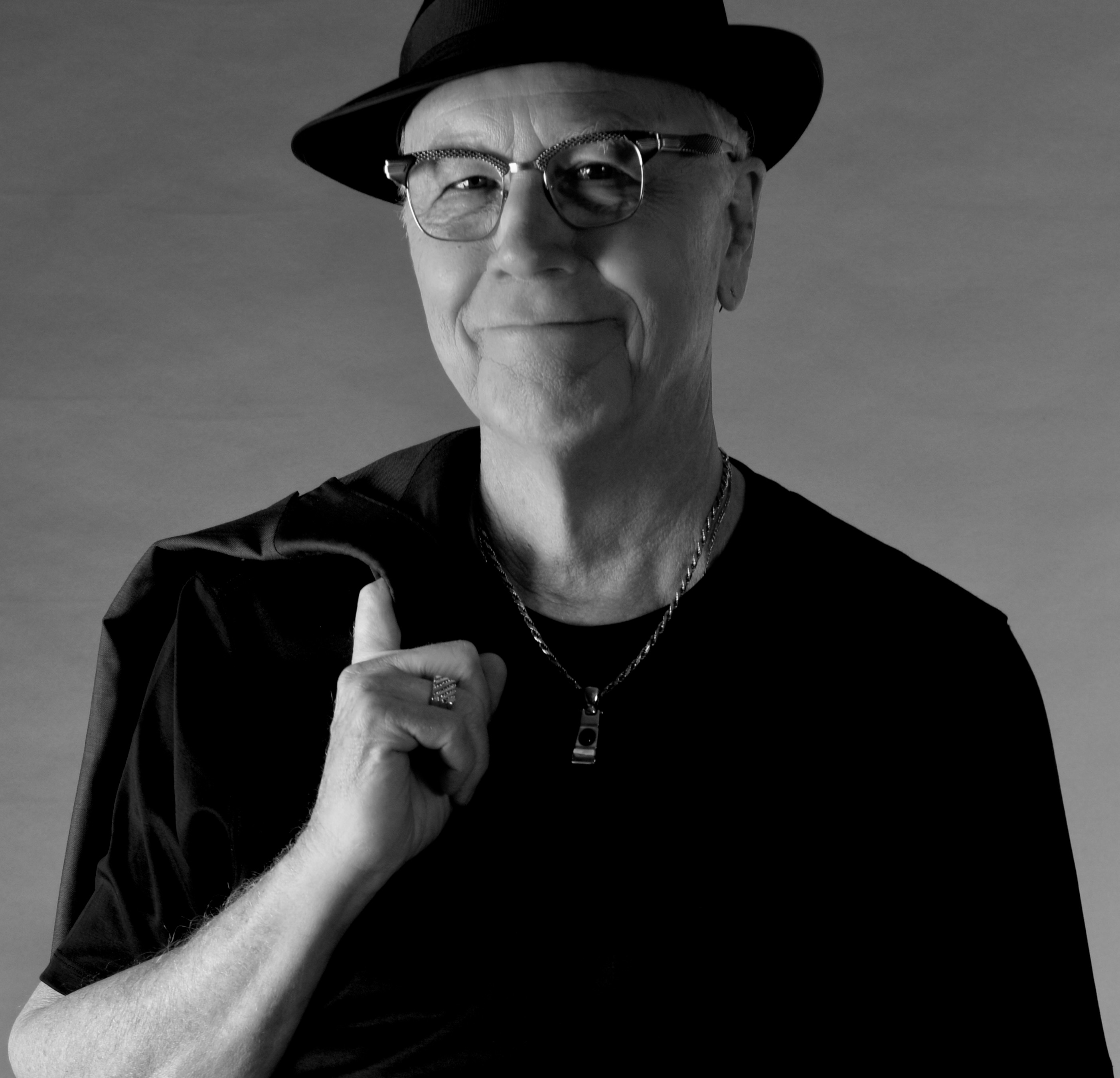
Michael Robinson thought he was done with music. Turns out music wasn't done with him.
Sixteen years ago, Robinson stepped away from the stage after a run that saw him barnstorming Northern California clubs, playing more than a hundred live shows and getting media profiles across the region.
Then he turned his attention to another passion — painting. The shift paid off. Bay Area media soon called him "a rising star of California's contemporary art scene," and Robinson built a serious visual art career.
But music never really left.
In fact, it was embedded in his art. The titles and inscriptions on many of Robinson's paintings draw directly from rock music, referencing artists like Bowie, Hendrix, U2, Rival Sons, Disturbed, and Highly Suspect. Over time it became clear that the same creative voice driving his visual work had always been rooted in music.
"When I was painting, I'd hear new versions of my songs playing in my head. The only way to scratch that itch was to go back to the studio."
The result is Holding Onto Lightning. This is not a look back. It's a leap forward.
The album revisits earlier material with new titles, rewritten lyrics, new guitar tones, fresh leads and fills, and a vocal style that sounds more confident than ever. The record also showcases Robinson's arranging skills, with parts for guitar, saxophone, percussion, and backing vocals that give the songs their depth and character.
Michael delivers modern rock with deep roots DNA. It reflects his experience fronting roots and alt rock bands. His music is built on strong grooves, big hooks, sharp storytelling, and richly layered performances by a cast of exceptional players.
"It took me thirty-five years to get here," he says. "But this is the album I always wanted to make."
"Michael has remarkable range as a songwriter and performer. The album covers a lot of musical ground, yet every song sounds like it belongs on the same record. That's not easy to do, but I really think we pulled it off."
— Jay Shilliday, Co-Producer & Mixing Engineer, Slate Run Productions
Told with wry humor and set to an infectious groove, this rocker steadily builds to an ironic conclusion — the cost of living today is so high even heaven expects to be paid on time.
The electrifying title track anchors the album with hard-driving guitars, a punchy saxophone intro, and a vocal that captures the thrill of chasing something powerful before it slips away.
A scorching hard-rock track built around searing guitar work and tight, layered vocals — one of the album's most aggressive moments.
The album culminates in this track, inspired by a real experience with sleep paralysis. This high-energy rocker blends sharp storytelling with a powerful hook about vivid dreams in the predawn darkness, with cameos from Freud, Picasso, and Elvis.
An acoustic-driven centerpiece about a man awakened from a near-death experience by a mysterious spiritual presence.
Preview of Robinson's live album Greetings From the Roadhouse — recorded over two nights at Meyer Sound Hall at Expressions College in Emeryville. By 2009 the band was performing roughly 50 shows a year, with three originals and nine classic covers on the disc.
Rich Freedman traces Robinson's two pivotal career pivots — from newspapers to music, from alternative rock to blues — noting the Michael Robinson Band was working three to four gigs a month with steady bookings through 2009. On slowing down: "Probably when I'm dead."
Cover feature with Robinson's own words on his sound: "Muddy Waters meets George Thorogood. We do songs from both." Highlights his 20 years in music and his belief that humor is essential to the blues — without ever making it a parody.
Rich Freedman profiles Robinson performing the same night as B.B. King at the Solano County Fair. Robinson on his ambition: "Musically, I'd like to be known as a good songwriter who also puts on a great live show — one that pays homage to those who have gone before me but still offers something unique."
Katrina Martin Davenport covers Robinson's CD release party for Playing in the Dark at Eli's Mile High Club in Oakland, tracing how his meeting with Johnny Nitro transformed his sound toward roadhouse blues and roots rock — with a little Muddy Waters and Chuck Berry along the way.
Landon Christensen profiles Robinson ahead of Davisfest, describing his style as "roadhouse blues and roots rock" — a fusion of retro rock and contemporary blues. Robinson on his philosophy: "We're all about having fun; we love to play."
Written three weeks after 9/11, Carol Feineman profiles Robinson as the Tabloids prepare to perform — a former reporter who covered the 1984 Democratic convention, now using music to carry messages about socioeconomic and political issues.
Carol Feineman's cover story follows Robinson from the Oakland Tribune newsroom to the stage, noting the band's songs had been heard on 120 college stations. Critics compared Robinson's singing to Iggy Pop and Lou Reed — two artists he never consciously sought to emulate.
Erin Mayes compares The Tabloids to a mix of Crash Test Dummies and '80s pop, noting Robinson's Pulitzer Prize nomination and his belief that message music is on the rise. The band's music has been compared to Wall of Voodoo, David Byrne, and The Velvet Underground.
Richard Bammer profiles Robinson's leap from journalist to frontman, describing the band as "Lou Reed meets The Clash" — bluesy alternative rock with ironic wit and a generous cross-section of American life.
Wallace Baine's feature profile traces Robinson's unlikely arc — from Pulitzer-nominated reporter to rock frontman at 39 — noting his tight, crunchy sound reflecting Lou Reed, MC5, Iggy Pop, Elvis Costello, and John Lennon.
The Chronicle's arts & entertainment guide spotlights The Tabloids as headliners, calling the band "a thoroughly contemporary" Bay Area act formed by journalist-turned-musician Michael Robinson, whose CD More Flaming Lies was on Oakland's Endless Loop label.
Lance Williams profiles Robinson's "scrambled-oeuvre assault" on the bestseller list and Billboard's top-100, noting Larry King introduced him as "somebody who could win a Pulitzer and a Grammy in the same year."
Howard Kurtz profiles Robinson's dual career as a hard-hitting banking reporter by day and songwriter by night, covering the release of his book and record Overdrawn — a multimedia broadside against the S&L scandal.
Business Editor James J. Mitchell reviews Robinson's song and book simultaneously, calling the book "by far the better product" while acknowledging the song accurately captures what S&L executives did — and how the public feels about it.
James V. Higgins reports on Robinson's unique marriage of business journalism and popular music — a book on the S&L fiasco marketed alongside lyric-driven rock songs. His spokeswoman calls him "the world's only singing journalist."
Robinson, dubbed "a rising star of California's contemporary art scene," brings his first Alameda exhibit to Frank Bette Center for the Arts as part of East Bay Open Studios. The piece notes his background as touring musician and Pulitzer-nominated journalist, and how song lyrics fuel his visual work: "Many of my ideas actually come from song lyrics that really resonate with me."
Elisabeth Frausto profiles Robinson's first gallery exhibit in La Jolla at Legends Gallery, describing his piece "Dance Cadaverous" as "Picasso meets punk rock." Gallery owner Roree Mayhew says Robinson's art "speaks to me — it's something I haven't seen in a while," gravitating toward works that "hit little cultural spots that have a little meaning."
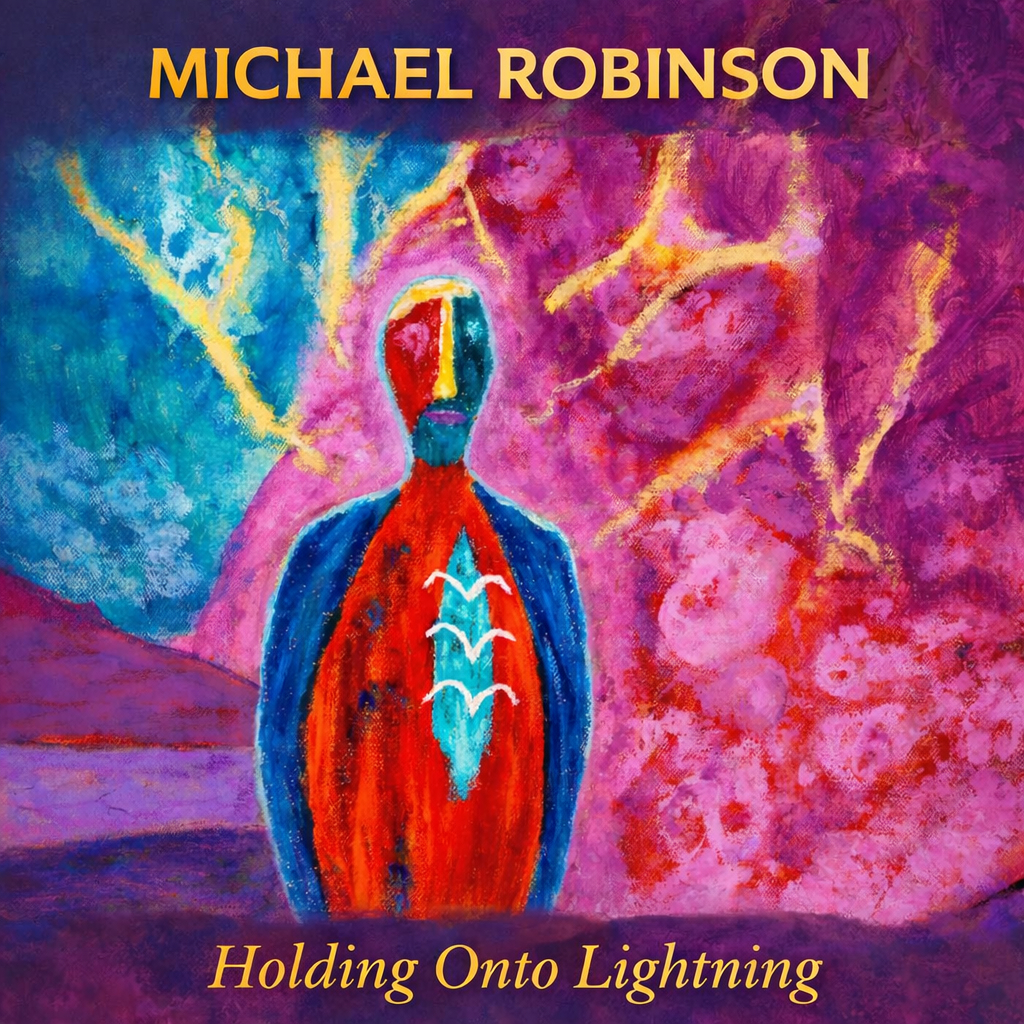
Streaming coming soon · First Single Coming Oct. 16
Available shortly on Spotify, Apple Music, and all major platforms.
Michael took several months away from painting to explore a new kind of visual art — using AI to create cinematic videos for his original songs.
Verse 1
Verse 2
Verse 3
Verse 1
Verse 2
Verse 3
Verse 4
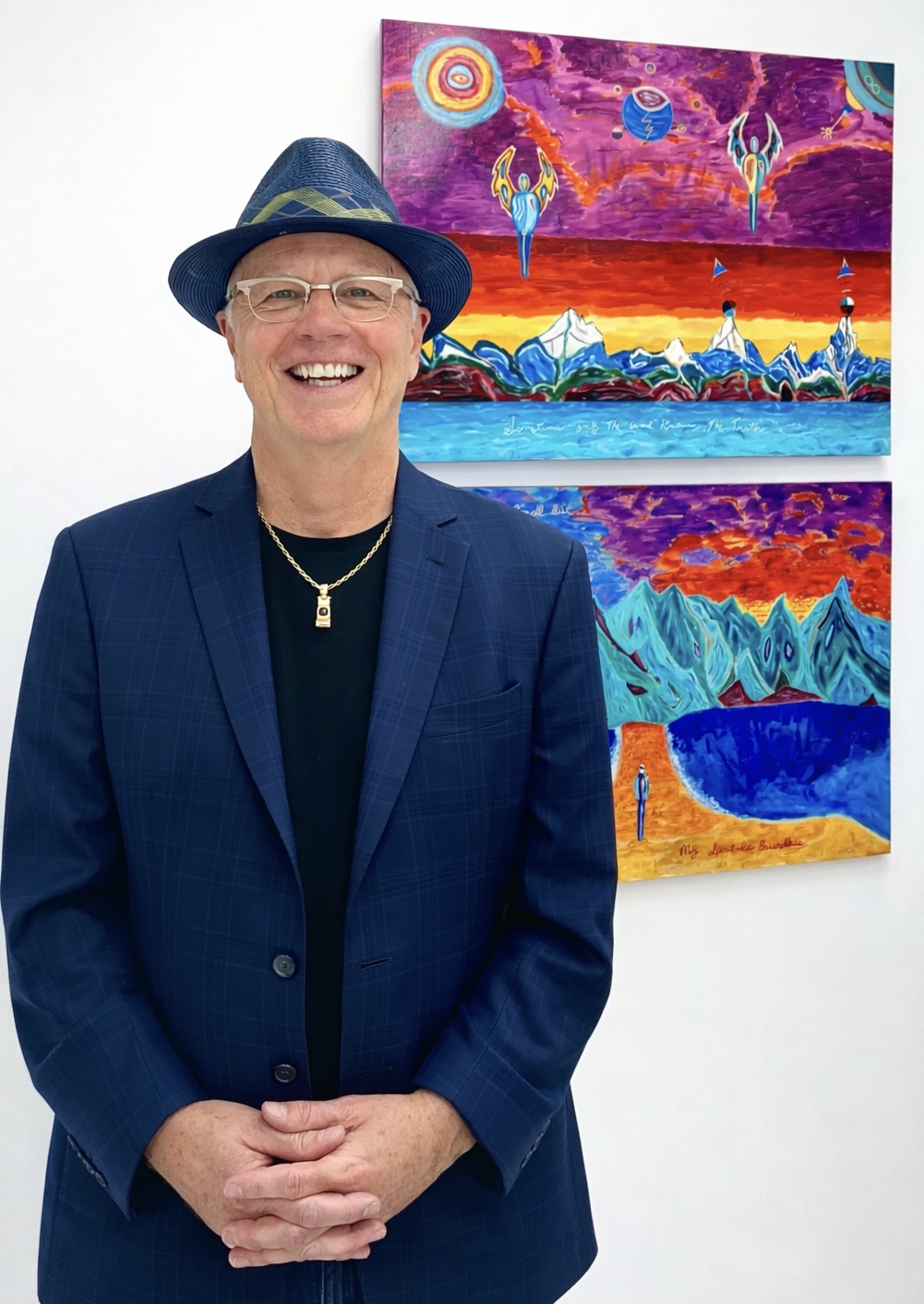
Photo © Tracy Robinson
Both paintings sold to private collectors.
The media has dubbed Michael a "rising star of California's contemporary art scene."
He is highly regarded for his savvy color story — a signature part of his abstract figurative style. Collectors love Michael's use of deep, rich colors, custom created, that make his work instantly recognizable whether the painting features a satirical subject or a lush landscape with metaphysical overtones.
His work combines bold color contrasts with intricate compositions, inviting viewers into layered narratives and emotional depth.
He's had gallery shows in several California cities and received favorable publicity in the East Bay Times, Lamorinda Weekly, Alameda Post, and La Jolla Light — further solidifying his reputation as a distinctive voice in contemporary art.
All songs written by Michael Robinson
with Johnny Nitro — Bad at Being Good, 30 Days Late, Halfway to Mexico
with Randy Quiroz — Dance in a Different Moonlight, Shoot at the Truth, Full Time Lover, Heads You Win, Tails I Lose
Vocals · Rhythm, Slide, Acoustic and Lead Guitar on All Tracks Unless Otherwise Noted
For press inquiries, interviews, and media requests, we aim to respond within 48 hours. You can reach us directly at michael@michaelrobinsonllc.com or fill out the form below.